
MBA vs. Master in Engineering Management: Choosing the Right Degree for Your Career Goals
 Reviewed by Dr. Jena AsgarpoorLast Updated: Jun 16, 2026
The growing demand for leadership roles in sectors such as healthcare, banking and finance, automotive, biotech, aerospace,and technology has made graduate degrees like a Master in Business Administration (MBA) and a Master in Engineering Management (MEM) increasingly popular. While both offer avenues to leadership, their focuses and outcomes are distinct, making the choice between them a critical decision for career-minded professionals.
For engineers and other professionals at a crossroads, understanding how an MBA program differs from an MEM program can help determine the next step in their careers.
Key Differences Between an MBA and a Master in Engineering Management
Whether your goal is to lead complex engineering management projects or drive business strategy, it’s important to first understand how each degree aligns with specific roles and industries. The primary difference between an MBA and an MEM lies in their focus.
| Degree Component | Master in Business Administration (MBA) | Master in Engineering Management (MEM) |
|---|---|---|
| Average Units/Credits | 30–60 credits; broad business curriculum | 30–40 credits; technical, operations, and management blended coursework |
| Duration | 18–36 months (full-time or part-time); 10 months in accelerated program | 12–24 months (full-time or part-time) |
| Program Focus | General Business Management; Business strategy; Finance and accounting; Marketing; Human resource management; Operations and supply chain; Economics; Ethics and corporate governance; Entrepreneurship; Technology and innovation | Managing and leading engineering and technology; Data analysis and decision-making; Engineering economics and financial management; Innovation and product development; Interdisciplinary collaboration; Management and Leadership of technical people, projects, and teams; Operations and quality management; Risk assessment and management; Systems engineering; Technical project management; Legal consideration in engineering and technology |
| Common Careers | Business Manager; CEO; Financial Analyst; Management Consultant; Marketing Director; Operations Manager; Product Manager; Startup Founder | Construction Manager; Design Engineer; Engineering Manager; Production Planner; Project Manager; Program Manager; Risk Analyst; Supply Chain Analyst; Systems Analyst; Technical Project Lead |
| Industry | Less than 30% of graduates work in engineering and technology industries | More than 90% of graduates work in engineering and technology industries |
| Eligibility | Any undergraduate degree is eligible to earn MBA | Engineering or STEM required to earn MEM |
MBA Overview: Broad Business Management
MBA programs emphasize business strategy, leadership development, and management skills. An MBA provides comprehensive training in business administration and management fundamentals, covering areas like finance, leadership, marketing, and operations. These programs are ideal for professionals aspiring to lead across industries or pivot to business roles beyond their technical expertise. The MBA curriculum is designed to prepare for managing the business decisions at the firm level.
Specializations
Many MBA programs offer concentrations or specialized tracks such as:
- Entrepreneurship
- Finance
- Healthcare Administration
- Leadership and Organizational Development
- Operations and Supply Chain Management
- Public Administration and Nonprofit Management
- Real Estate
- Sports Management
Full-time vs. Part-time Options
While full-time MBA programs may suit early-career professionals, part-time or executive MBA programs cater to working professionals seeking flexibility. MBA programs are often offered through various learning modalities, including fully online and hybrid options.
Career Pathways MBA graduates commonly pursue roles in management consulting, executive leadership, or entrepreneurship. They may find themselves in industries and on career paths that include:
Leadership and Executive Roles
- Chief Operating Officer (COO)
- General Manager
- Nonprofit or NGO (non-governmental organization)
- Executive Director
Strategic and Consulting Roles
- Business Intelligence Analyst
- Change Management Consultant
- Corporate Development Manager
Marketing and Sales Roles
- Brand Manager
- Digital Marketing Specialist
- Sales Director
Financial and Analytical Roles
- Investment Banker
- Financial Planner
- Private Equity Analyst
Watch: How to Choose an MBA Program with Career Support | Michigan Ross MBA Watch: What is Engineering Management? | Differences between Project Management and Engineering Management
Master in Engineering Management Overview: Technical and Operational Leadership
Professionals with an MEM possess both technical knowledge and business acumen. An MEM is a natural choice for engineers aspiring to management roles in technology-driven sectors. MEM programs bridge the gap between engineering expertise and advanced management skills, preparing graduates for project management and technical leadership roles.
Specializations
MEM students can elect to further hone their skills in a specific area of interest by selecting a specialization or concentration, which may include:
- Construction Management
- Data Analytics and Decision Science
- Project Management
- Healthcare Engineering Management
- Operations and Supply Chain Management
- Product Development and Innovation
- Quality and Process Improvement
- Sustainability and Environmental Engineering
- Technology Management
Full-time vs. Part-time Options
Engineering management degree programs offer flexible formats, including full-time, part-time, online, and hybrid options.
Career Pathways
Many engineering management degree holders pursue technical and managerial roles. These types of roles often oversee teams and budgets, lead design innovation, streamline processes, and work with emerging technologies. Their career paths may include:
Industries:
- High-tech
- Biomedical; Biotech; Medical Devices companies
- Aerospace, Automobile
- Construction and Architectural
- Research and Development
- Manufacturing
- Engineering Services; Public or Private Utilities
Technical and Engineering Roles
- Automation Engineer
- Systems Architect
- Systems Engineer
- Reliability Engineer
- Testing Engineer
Project-focused Roles
- Infrastructure Planner
- Risk Engineer
- Construction Estimator
Consulting and Research Roles
- Innovation Strategist
- R&D Consultant
- Technology Policy Analyst
Emerging Roles
- AI/Machine Learning Engineer
- Cybersecurity Engineer
- Sustainability Program Manager
Comparing Costs and Return on Investment
Cost Comparison
Whether you are considering pursuing an MBA or earning an MEM, going to graduate school is a significant investment, both in terms of time and finances. Understanding the associated costs and evaluating the potential return on investment (ROI) are crucial steps in determining whether this path aligns with your career objectives.
The cost of MBA programs and master’s degrees in engineering vary widely depending on institution type, program format, and geographic location. According to the Education Data Initiative, the average total cost of an MBA is $60,410 compared to the average cost of a Master of Science in Engineering degree, which is $61,380.1
Public universities generally offer lower tuition rates, especially for in-state residents, while private institutions and programs with strong reputations may charge significantly higher fees. Students may lower tuition costs through scholarships, grants, employer education assistance programs, and work-study programs.
Additional Expenses to Consider
Beyond tuition, students in any graduate program, incur other costs associated with earning their master’s degree, including:
- Administrative Fees: Costs for enrollment, graduation, and access to campus resources.
- Textbooks and Course Materials: Engineering-focused coursework often requires specialized resources, which can add several thousand dollars to total expenses.
- Technology and Software: Many MEM programs require students to use advanced engineering software or tools, which may incur licensing costs.
- Living Expenses: Housing, meals, and other personal costs which may vary based on the program’s location for programs offered on-campus or with an in-residence requirement.
Job Outlook
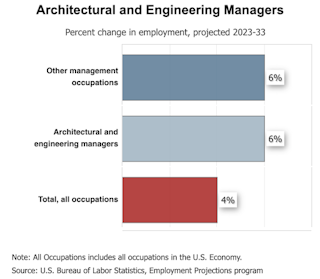
Determining the value of a master’s degree like an MBA or an MEM depends on your career goals and financial situation. U.S. Bureau of Labor Statistics projects that by 2033, management occupations will grow faster than the average of all occupations, and nearly 1.2 million openings are projected each year.2
MBA Earning Potential
The Graduate Management Admissions Council's (GMAC) survey found that the projected median starting salary for MBA holders is $125,000.3
MEM Earning Potential
According to the U.S. Bureau of Labor Statistics, engineering managers earn a median salary of $171,270 annually, with opportunities for further growth depending on experience and location. Over the next decade it is projected that there will be about 15,000 openings for architectural and engineering managers each year and 4% job growth (faster than the average of other occupations) .4
Source: U.S. Bureau of Labor Statistics
Work-life Balance
MBA Programs
MBA programs cater to a diverse range of students, from early-career professionals to seasoned executives, with part-time and executive formats designed for those balancing full-time jobs and personal responsibilities. These programs offer flexibility through full-time, part-time, and online options, with full-time MBAs sometimes requiring additional time commitment for immersive experiences. While part-time formats may allow professionals to continue working, the rigor of the program may be challenging while juggling other personal and professional responsibilities.
MBA coursework emphasizes case studies, group projects, and networking which demand collaboration outside class hours and can strain work-life balance, particularly for part-time students. Overall, MBA programs are best suited for those ready to prioritize education or adept at managing time effectively, with part-time formats offering the most balance for those already working full-time.
MEM Programs
MEM programs are designed for people who have engineering and STEM education, work in engineering and technical fields, and seek leadership roles but want to stay close and connected to technical and engineering environments. MEM programs are designed for early- to mid-career professionals who must balance work and education. Most universities offer full-time and part-time options and program duration can range from one to two years. Part-time formats often offer evening or online classes to accommodate working professionals.
MEM coursework includes individual projects and assignments that are demanding but enriching as they introduce new managerial and business operation concepts to learners. MEM courses also emphasize team projects to replicate engineering work that is typical in industry. MEM programs are well-suited for working professionals and their flexible formats may support a better work-life balance than full-time MBA programs.
Source: Education Data
When to Choose an MBA vs. a Master in Engineering Management
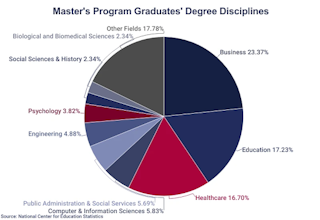
Education Data’s report breaks down the popularity of certain major disciplines. Today, more than 23% of master’s degree graduates have a degree in business, while less than 5% have a degree in engineering.5
As the market has become saturated with MBA holders and the demand for engineering and technology professionals grows, there has been a clear and steady increase in demand for MEM graduates. The number of MEM programs and their enrollment have steadily increased for this reason.
Those who pursue MEM degrees have engineering and STEM backgrounds and work in engineering and technology industries. MEM programs capitalize on the shared experiences of the students to tailor the curriculum, learning opportunities, assignments, and discussions targeting STEM concepts. This is in contrast to MBA programs that must accommodate individuals who come from all educational and work backgrounds.
As someone who is considering whether to earn a master’s degree in business administration or in engineering management, you should think about your own career goals, passions, interests, and learning style.
Choose an MBA if you want to:
- Transition to broad business leadership roles
- Pivot into industries like finance, business consulting, or corporate strategy
- Gain expertise in business administration or entrepreneurship
- Work in industries that prioritize strategic thinking, operations, and business development across various sectors
Choose an MEM if you want to:
- Lead engineering teams or manage technical projects
- Promote within the engineering industry
- Develop specialized skills in engineering management
- Excel in industries that require technical expertise combined with leadership skills, especially in engineering-driven or innovation-focused organizations
Spotlighted MBA Programs
Duke University
Duke University’s Fuqua School of Business offers a range of MBA programs designed to cater to various career stages and lifestyles. These include the full-time Daytime MBA, the Weekend Executive MBA, the Global Executive MBA, and the Accelerated Daytime MBA. Each program emphasizes team-based learning, leadership development, and flexibility, equipping students with the skills to thrive in diverse business environments.
Highlights
- Length of Programs: The Daytime MBA is 22 months, the Weekend Executive MBA is 19 months, and the Global Executive MBA spans 18 months. The Accelerated Daytime MBA can be completed in under a year.
- Flexibility: The Weekend and Global Executive MBA programs feature hybrid formats that combine online sessions and short residencies.
- Curriculum: Students can choose from over 100 electives, hone their focus by choosing from a variety of concentrations, and engage in experiential learning opportunities to tailor their MBA experience to their career goals.
Indiana University
The Kelley School of Business at Indiana University offers a range of MBA programs, including Full-time+Flex MBA, Kelley Direct Online MBA, and the 3/2 MBA program, catering to diverse career goals and schedules. These programs emphasize flexibility, global learning, and learning customization with features like immersive experiential learning, electives, and industry-focused academies. Kelley’s MBA programs aim to equip students with advanced business acumen, leadership skills, and career preparation for success in a dynamic business landscape.
Highlights
- Length of Program: The Full-time+Flex MBA and Kelley Direct Online MBA span two years. The 3/2 MBA integrates undergraduate and MBA degrees in five years.
- Flexibility: The Kelley Direct Online MBA is highly customizable, with 50% electives and options to specialize in one of seven majors. The Full-time+Flex MBA provides an option to complete the second year either on-campus or online from anywhere.
- Curriculum: Kelley’s MBA programs focus on a robust Integrated Core curriculum, experiential learning through global consulting projects, and industry-specific academies to build leadership and strategic expertise.
Purdue University
Purdue University's Mitch Daniels School of Business offers a range of MBA programs tailored to diverse career goals, emphasizing innovation, analytical problem-solving, and leadership development. The school offers a rigorous one-year residential MBA, a flexible online MBA, and specialized programs like the MS in Engineering + MBA dual degree. Purdue leverages its STEM foundation to provide MBA students with a tech-forward education that prepares them for leadership in modern industries.
Highlights
- Program Length: The One-Year MBA is completed in just 11 months, while the online MBA can be finished in as little as two years.
- Flexibility: The online MBA allows students to balance full-time work with studies, immersive experiences, and study abroad options that enable students to earn course credits.
- Curriculum: Coursework focuses on quantitative and managerial skills, strategic leadership, and experiential learning through projects tied to emerging technologies.
Spotlighted MEM Programs
Stevens Institute of Technology
Stevens Institute of Technology
The Engineering Management Master's program at Stevens Institute of Technology blends technical expertise with leadership and decision-making strategies and equips students with the skills to manage complex engineering projects. The program is offered fully online, providing flexibility for working professionals, and includes coursework in areas such as operations research, systems modeling, and risk analysis. Students benefit from a curriculum that emphasizes data science, project management, and strategic decision-making. MEM Graduates are prepared for roles in engineering leadership across an array of industries.
Highlights
- Length of Program: The program requires 30 credit hours (10 courses) and can be completed in as little as two years.
- Flexibility: Delivered 100% online with multiple start dates (fall, spring, summer), allowing students to balance their careers while earning a degree.
- Curriculum: Focuses on engineering management fundamentals, including electives in managerial analytics and supply chain/logistics management, culminating in a practical capstone project.
Old Dominion University
The Master of Engineering Management (MEM) program at Old Dominion University is designed for both working professionals and traditional full-time students with technical undergraduate degrees. The program emphasizes applying engineering principles to business practices and focuses on technological leadership, project management, and organizational systems. Offered online and in-person, it provides evening classes to accommodate diverse schedules, making it suitable for students balancing work and study.
Highlights
- Length of Program: The MEM program requires 31 credit hours, typically completed over 1-2 years, depending on full-time or part-time enrollment.
- Flexibility: Courses are available in the evenings, both online and on-campus, with synchronous learning for remote students, ensuring accessibility for working professionals.
- Curriculum: The program includes core courses such as cost estimating, operations research, and project management, alongside elective options and a one-credit capstone project, focusing on real-world applications in engineering management.
Tufts University
The Master of Science in Engineering Management (MSEM) program at Tufts University is designed for STEM professionals looking to advance their leadership and management skills in technology-driven environments. The program offers a blend of technical knowledge, business acumen, and leadership development through a flexible structure, including fully online or hybrid options, tailored for working professionals. Students engage in hands-on projects, immersive learning experiences, and mentorship, all while benefiting from Tufts' extensive alumni network and faculty expertise.
Highlights
- Length of Program: The MSEM can be completed part-time in as little as two years, depending on the student's pace of study.
- Flexibility: The program supports a fully online format or a hybrid approach, allowing students to choose electives online or in-person and participate in optional immersive weekend experiences.
- Curriculum: The curriculum emphasizes strategic thinking, data-driven decision-making, and leadership, complemented by milestone projects such as the Capstone Leadership Project and opportunities to specialize in areas like product management or business analytics .
FAQs
What is the average salary for MBA vs. MEM graduates?
A: The Graduate Management Admissions Council's (GMAC) survey found that the projected median starting salary for MBA holders is $125,000, significantly higher than the $75,000 for bachelor's degree holders.3 According to the U.S. Bureau of Labor Statistics, engineering managers earn a median salary of $171,270 annually.4
Can you pursue an MEM without work experience?
A: Some MEM programs accept students with minimal experience, but many prefer candidates with post-baccalaureate work experience in engineering.
Is an MBA more versatile than an MEM?
A: An MBA is more versatile if you aim to explore a wide range of industries or roles, especially in areas like strategy, marketing, or finance. An MEM is better suited for those who prefer to pursue management and leadership roles in the technical track and remain in engineering, science, and technology industries.
Which industries prefer MEM graduates?
A: Sectors including technology and IT; manufacturing and operations; aerospace and defense; healthcare and biomedical engineering; energy and utilities; and construction and civil engineering value MEM graduates for their technical expertise and management skills.
Quick Takes: MBA vs. Master in Engineering Management
- MBA — Broad Application Across Industries: An MBA provides a comprehensive understanding of business operations, including finance, marketing, management, and strategy. It is valued across nearly every industry, from healthcare to technology to consulting.
- MBA — Career Flexibility: Graduates often pivot into diverse roles, including general management, business development, consulting, or entrepreneurship. The skills students gain in an MBA program may be applicable to both technical and non-technical sectors.
- MBA — Networking Opportunities: MBA programs often attract a diverse cohort and provide access to extensive alumni networks, which can be beneficial for career changers or those looking to evolve into higher positions.
- MEM — Technical Focus with Managerial Skills: The MEM is tailored for engineers or technical professionals who want to move into leadership roles without losing their connection to technical work. It focuses on project management, systems thinking, and technology strategy.
- MEM — Specialization in Engineering and Technology: While versatile within technical industries, it may be less appropriate for those seeking roles in finance, marketing, or general management.
- MEM — Bridge Between Technical and Business Roles: MEM graduates are ideal for roles requiring both technical knowledge and business acumen, such as operations management, product management, or engineering leadership.
Conclusion: Choose the Program That’s Right For You
Aligning your career goals with the right degree is essential when deciding between an MBA and a MEM. Consider your educational background, professional aspirations, current experience, and long-term ambitions to determine which program will best support your desired path. To make a well-informed decision, take the time to explore program details and reach out to an enrollment advisor for further guidance and to discuss your individual career objectives.
Sources
- https://educationdata.org/average-cost-of-a-masters-degree
- https://www.gmac.com/-/media/files/gmac/research/employment-outlook/2023_gmac_corporaterecruiters_report.pdf
- https://educationdata.org/number-of-college-graduates/
- https://www.bls.gov/ooh/management/
- https://www.bls.gov/OOH/management/architectural-and-engineering-managers.htm
- https://educationdata.org/number-of-college-graduates/
More in Education Landscape
View all Education LandscapeTop Master of Engineering Management Programs in Ohio
Explore Ohio's top online Master of Engineering Management programs, including formats, costs, job outlook, and career pathways for engineering leaders.
Online Doctorate in Engineering Management: 2026 Guide to Programs and Careers
A 2025 guide to online PhD in Engineering Management programs — curriculum, who should apply, top schools, admissions, and career outcomes.
What Is an Engineering Management Minor?
Learn how an engineering management minor pairs technical training with business and leadership skills, what its curriculum covers, and which schools offer it.
Masters in Engineering Management Online No GRE: 12 Programs You Can Start Today
A guide to online master’s in engineering management programs that waive the GRE, with admissions policies, costs, and career outcomes.
Your Guide to Earning a Master of Engineering Management in Tennessee
Explore Master of Engineering Management programs in Tennessee, including what to look for, career outcomes, financial aid, and notable universities.
What Can I Do With a Master’s in Engineering Management?
Explore what you can do with a Master’s in Engineering Management (MEM), including admissions requirements, career paths, in-demand industries, and program spotlights.
Dr. Jena Asgarpoor
Advisory Committee Member | President of the American Society for Engineering Management (ASEM), Director and Graduate Chair, Master of Engineering Management
Dr. Jena Asgarpoor is a Professor of Practice at the University of Nebraska – Lincoln and the Director for the Master of Engineering Management Program in the College of Engineering. She received her Ph. D. and M.S. in Industrial Engineering, specializing in Engineering Management, from Texas A&M University in College Station where she had previously earned a B.A. in Political Science (Summa Cum Laude). Prior to UNL, she was a professor at Bellevue University for 26 years, where in 1994 as part of her teaching portfolio she developed and taught the first fully online asynchronous web-based course offered by that institution. Her interests lie in engineering management, quality management, pedagogy, and assessment of teaching and learning, particularly in the online space. She is active in the American Society for Engineering Management (ASEM) and the American Society for Engineering Education (ASEE). In recent years she has President of the Council of Engineering Management Academic Leaders (CEMAL) and Program Chair and Chair of the Engineering Management Division (EMD) of ASEE. Dr. Asgarpoor is currently serving as President of the American Society for Engineering Management (ASEM).